When the world burns, make cyanotypes
Like most people in Europe, I’ve been living through endless days of heat, drought and sunshine this Summer. It's been difficult to get out with a camera. For dramatic, moody images you want dark clouds, not blue skies. For hiking the landscape, you want cool temperatures, not the 30ºC we’ve been experiencing.
But I discovered this weather is good for at least one type of photography project: wet cyanotypes.
This was a project that started as a fun way to stay creative in the heat. But as I simplified my workflow and found my subject, it turned into something more serious.
The wild child of photography
Regular readers will know that I’ve used cyanotypes in the past for my RPS Fellowship panel. In that project, one of the challenges I faced is that a panel needs consistency. But cyanotype is a process that does not want to be controlled. Like a grumpy teenager, it likes to do its own thing.
Some days it’s happy to give you precise borders, but on other days it wants to leak under the edges of your masking tape. Some days it’s happy to give you a smooth finish, but on other days it prefers a more grainy texture. That’s why I typically needed to make six versions of a print to get one that was suitable for my panel.
Encouraging variability
The ‘wet’ cyanotype process is different. It doesn’t just embrace the variability of cyanotype: it amplifies it. Practitioners spray vinegar on the coated paper, add turmeric and soap bubbles, and cover the paper with shrink wrap to create texture in the print. Some people layer objects under multiple panes of glass to blur the objects that are furthest from the sensitised paper (this simulates the depth of field effect you get with a camera).
It's a good candidate for a Summer project because you can work outside in the garden (wet cyanotypes are messy). The high UV levels of Summer mean that prints develop relatively quickly. And the warm weather means prints dry in an hour or so rather than having to wait overnight.
Early attempts
But my first experiments with wet cyanotype did not go well. I coated a sheet of paper with cyanotype and then threw everything at it: the soap bubbles, the turmeric, the shrink wrap…
Wet Cyanotype with everything
This was my first attempt. It certainly looked different to my architectural cyanotypes, but there was too much going on. It’s probably not helped by the fact that I was using so many different types of plant, leaves and ferns. I was struggling to find a suitable subject for the contact printing process.
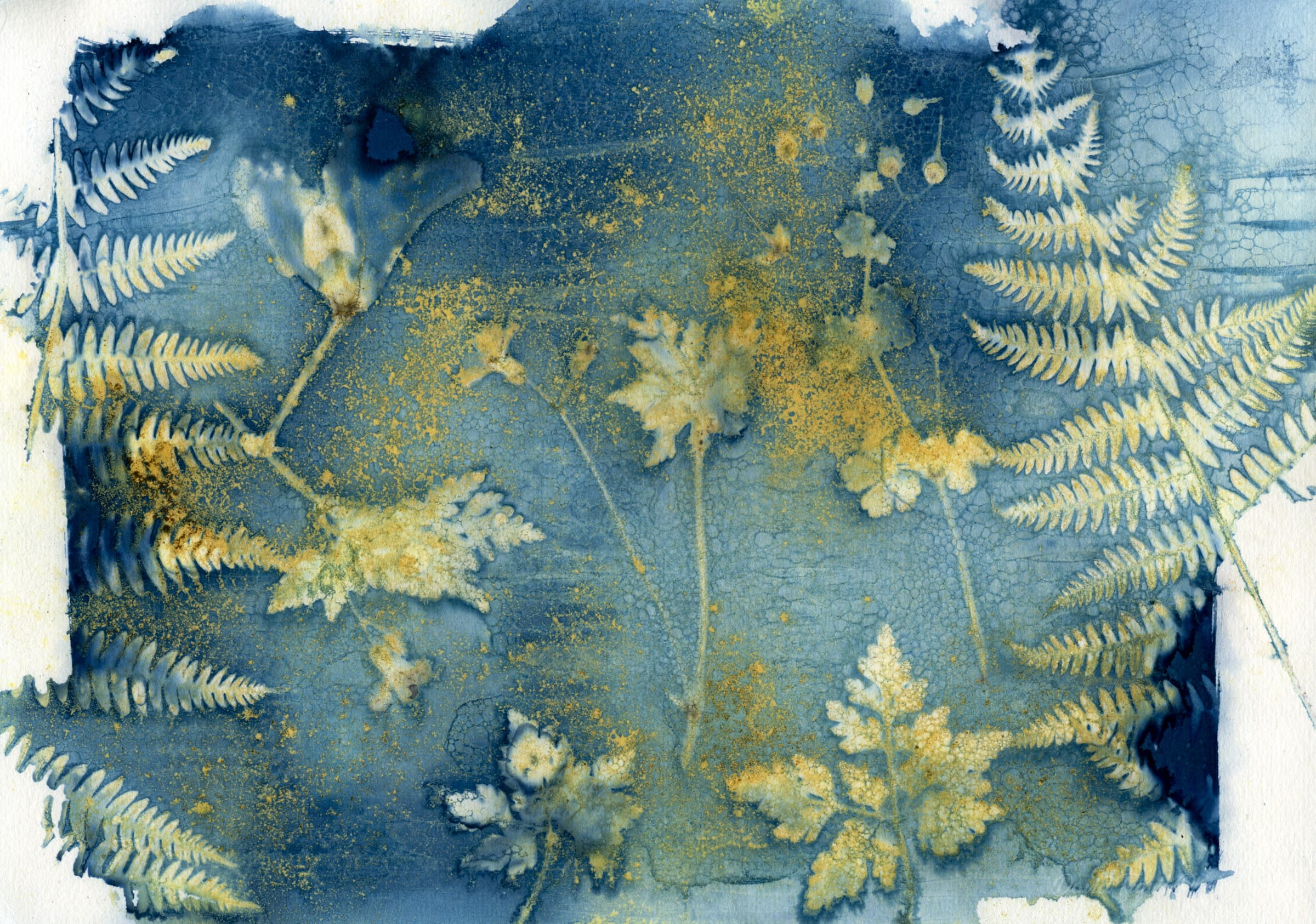
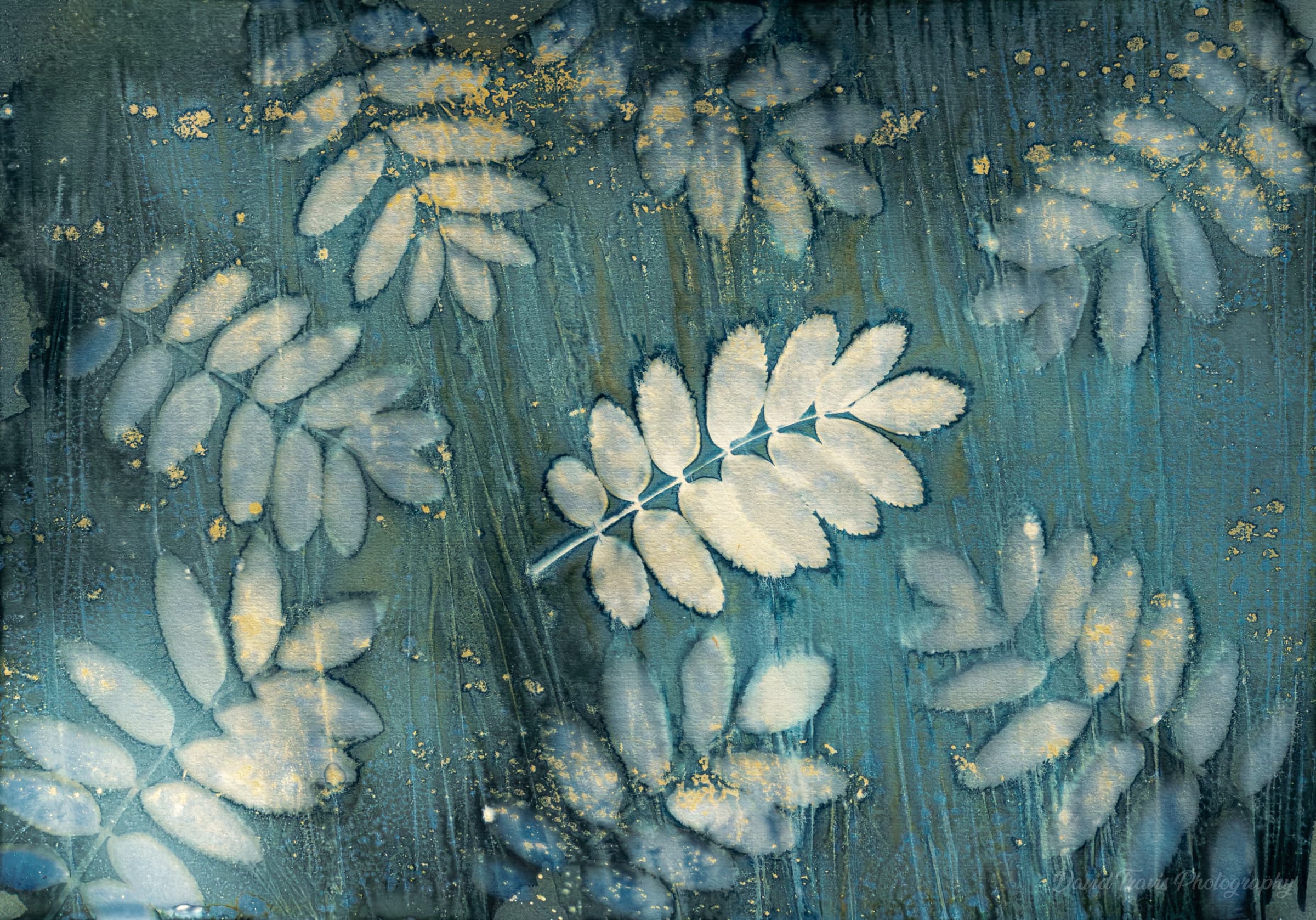
Rowan leaves
Here I restricted the composition to one type of leaf and used the ‘layered’ panes of glass idea to get a depth of field effect. I still think there’s too much going on. And the composition here is too static. It's like a wallpaper pattern.
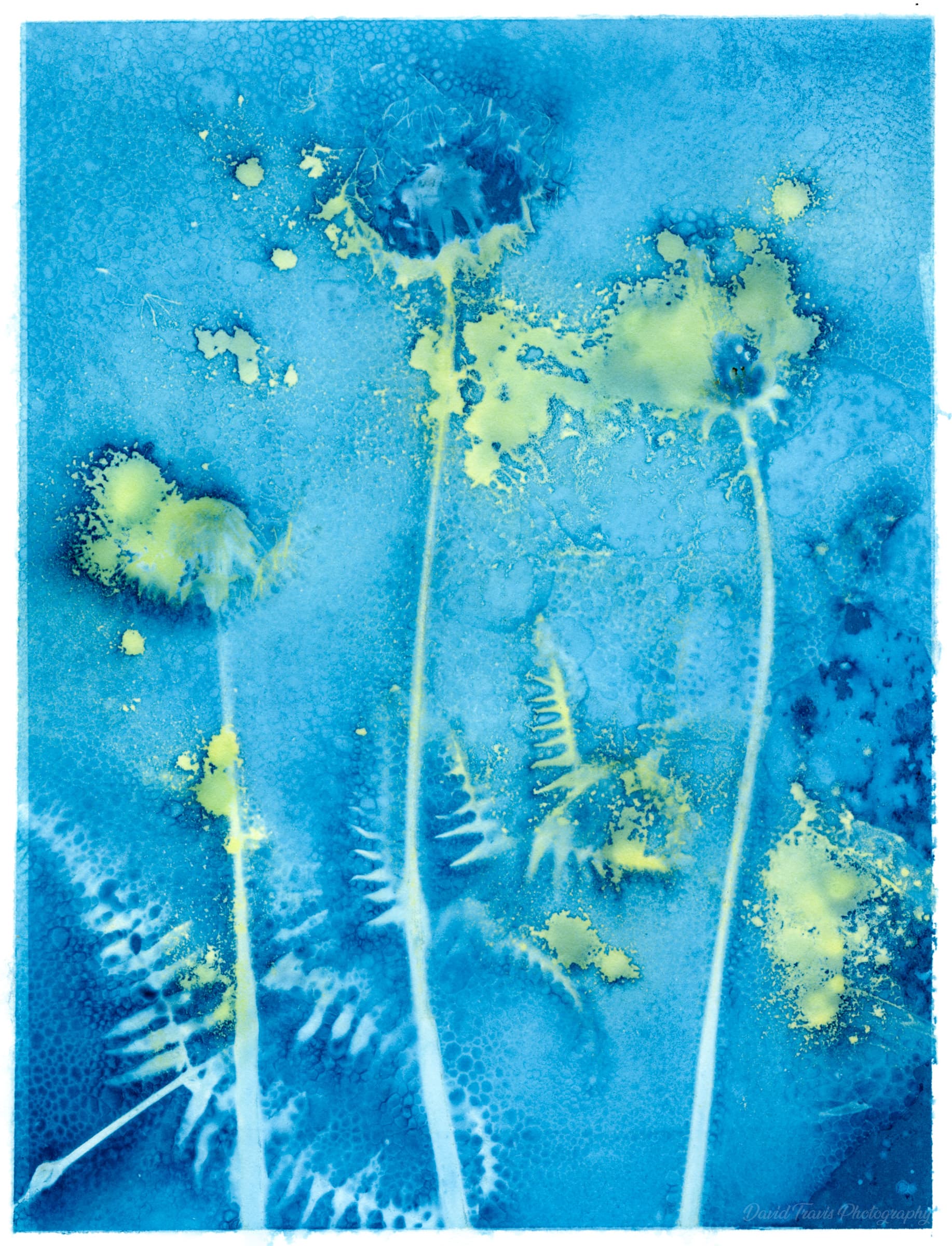
Dandelions
In this example, showing dandelions and ferns, I removed the panes of glass but I was still adding everything else. Again, I felt there was too much to look at. I decided I wanted something simpler.
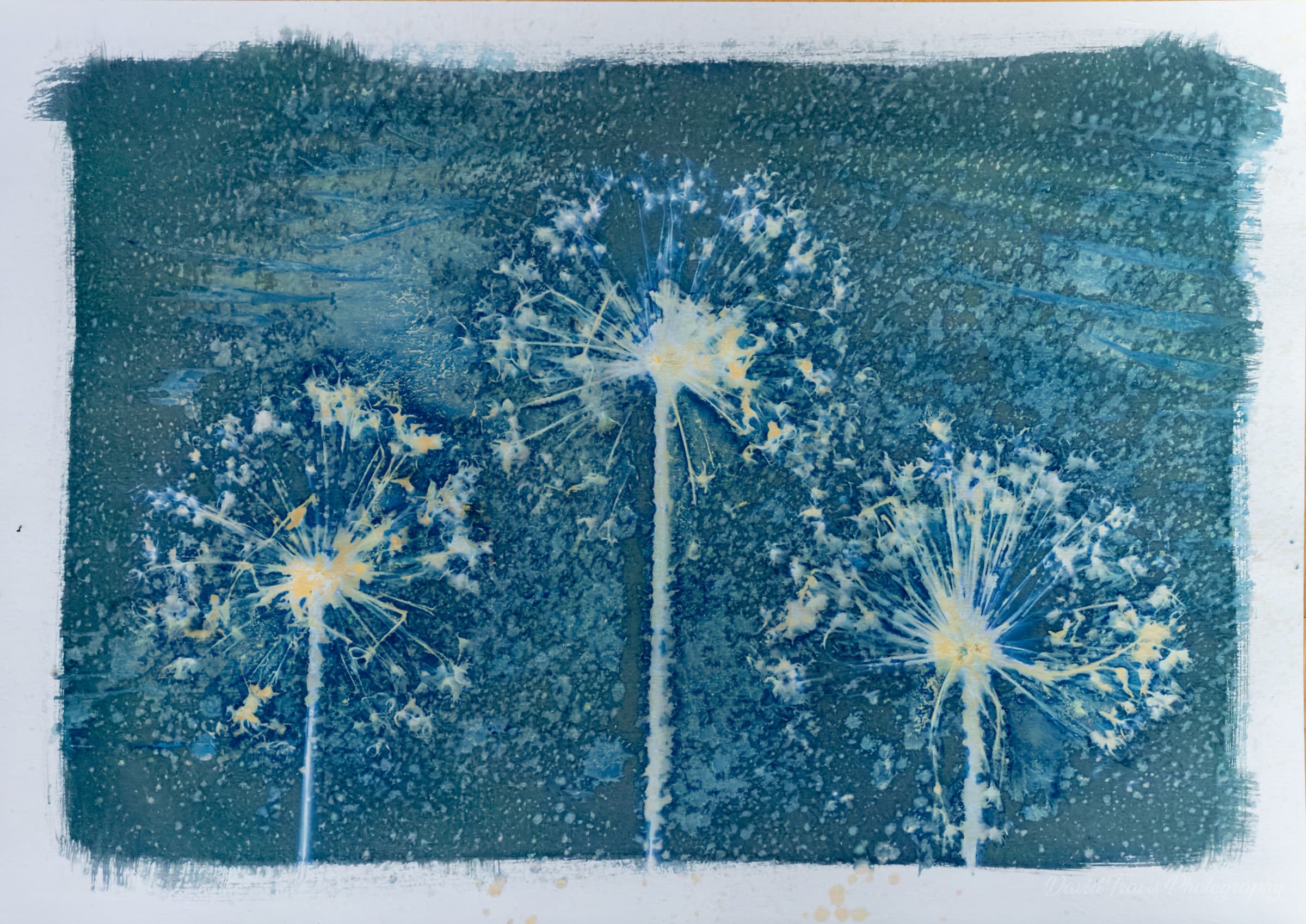
Shrink Wrap Texture
As I restricted myself to fewer ingredients, I felt I was getting somewhere. For this image I used the turmeric and shrink wrap, but nothing else.
A Turning Point
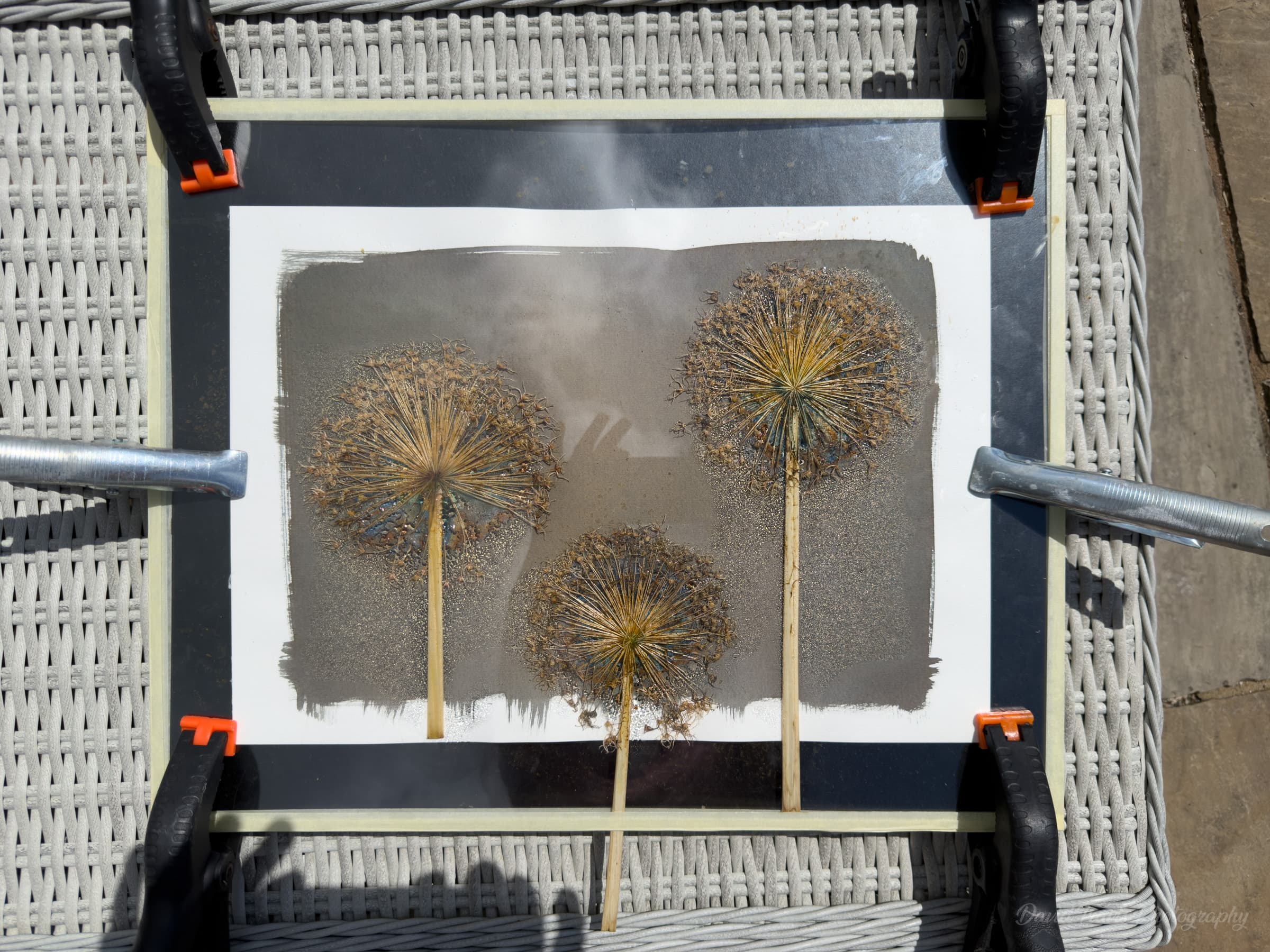
Eventually, I settled on just one ingredient: turmeric dissolved in water. I sprayed this where I wanted yellow highlights to appear in the final print.
Exposure in progress
In this picture, you can see the exposure in progress. The paper quickly turns brown in sunlight. I exposed the paper for 60-90 minutes.
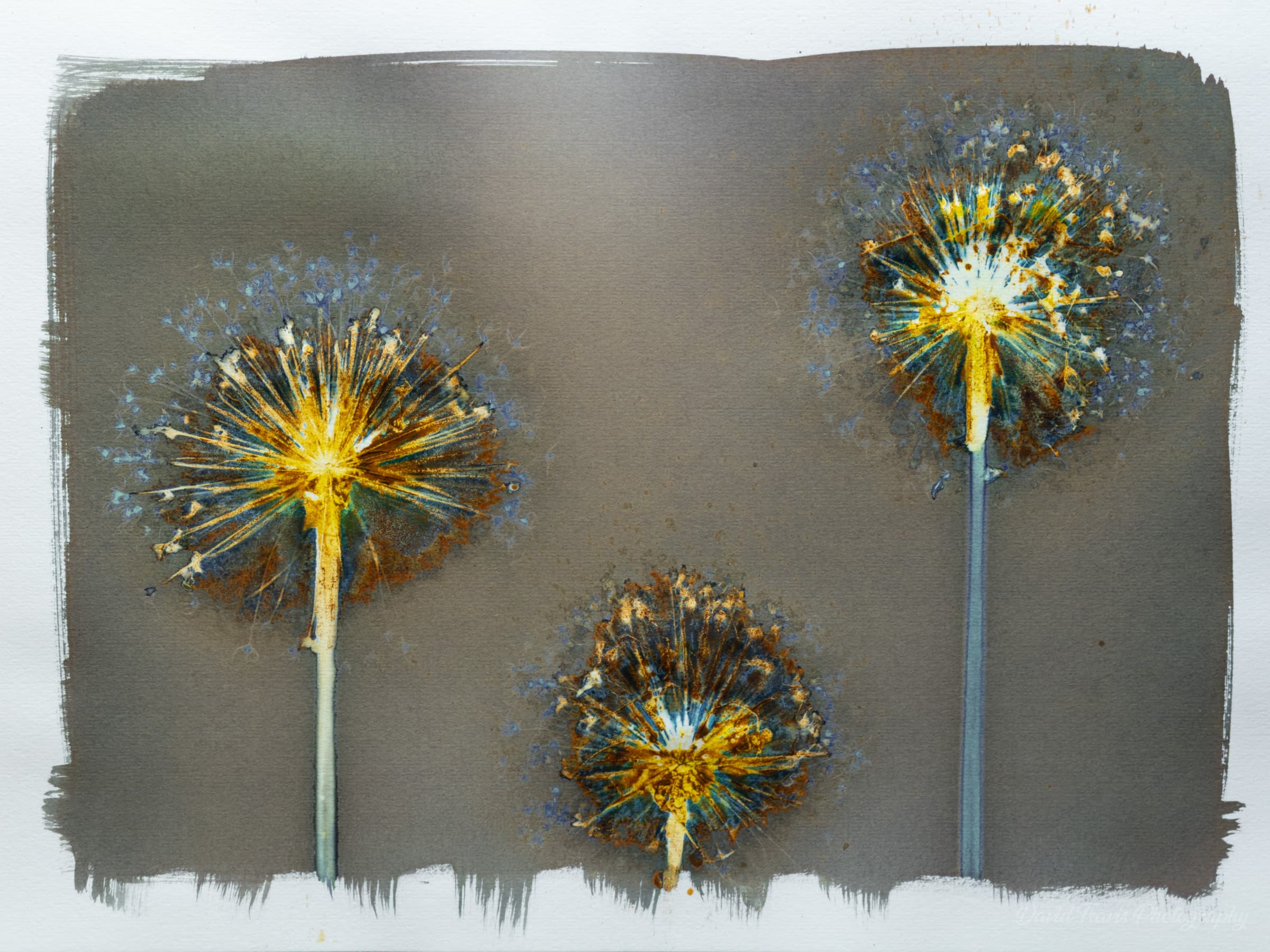
Before the wash
This is how the print looks immediately after exposure, but before washing. I really like the yellow and ochre colours in this print, but sadly it doesn’t last. You need to wash out the cyanotype sensitiser or the print will continue to change over time (unless you keep it in the dark).
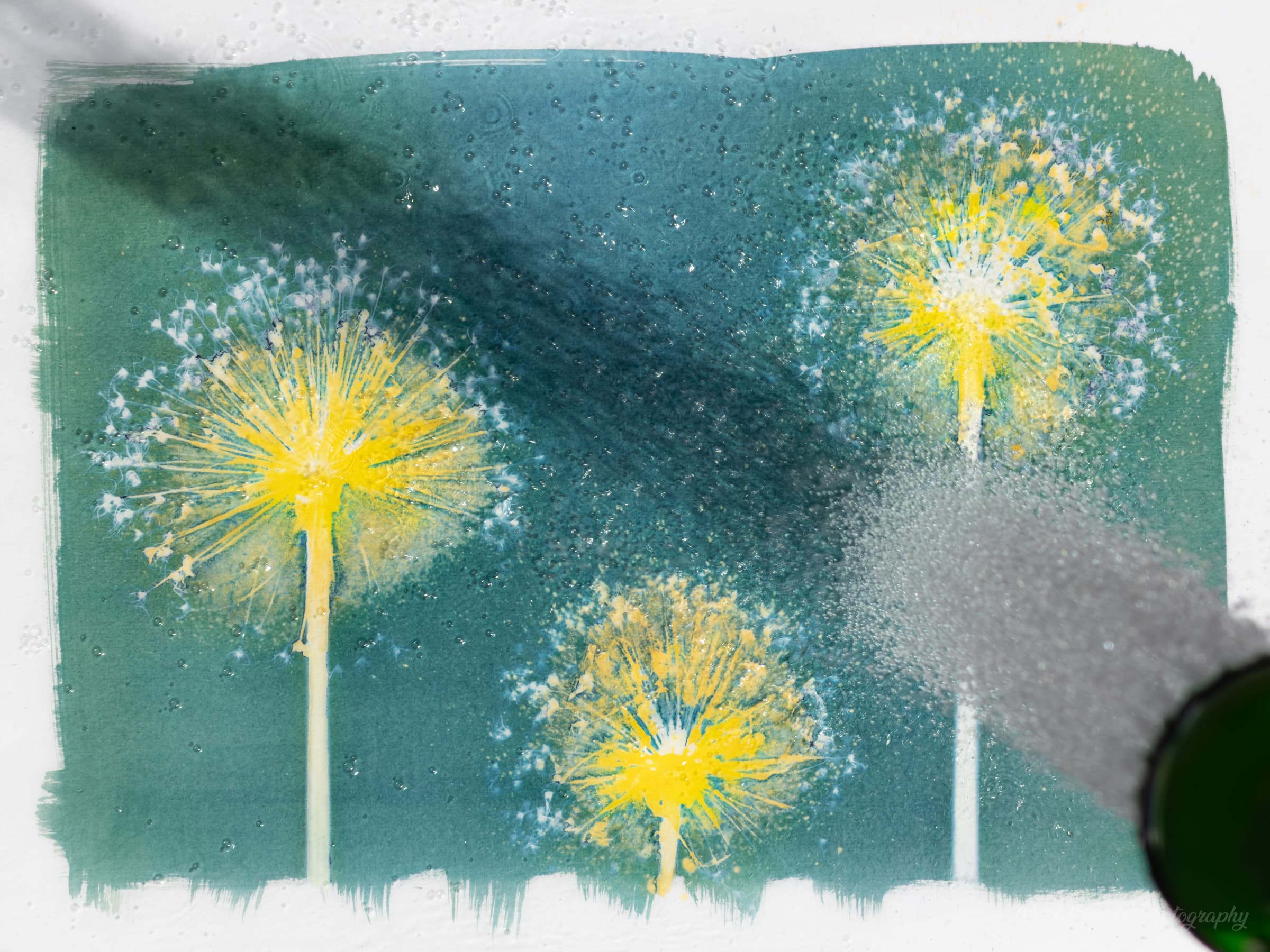
During the wash
This shows the print being washed. I’ve lost the nice browns but gained some interesting blue-greens and yellows.
The World Burns
After washing and applying a dose of weak hydrogen peroxide solution, you get the classic Prussian blue of cyanotype.
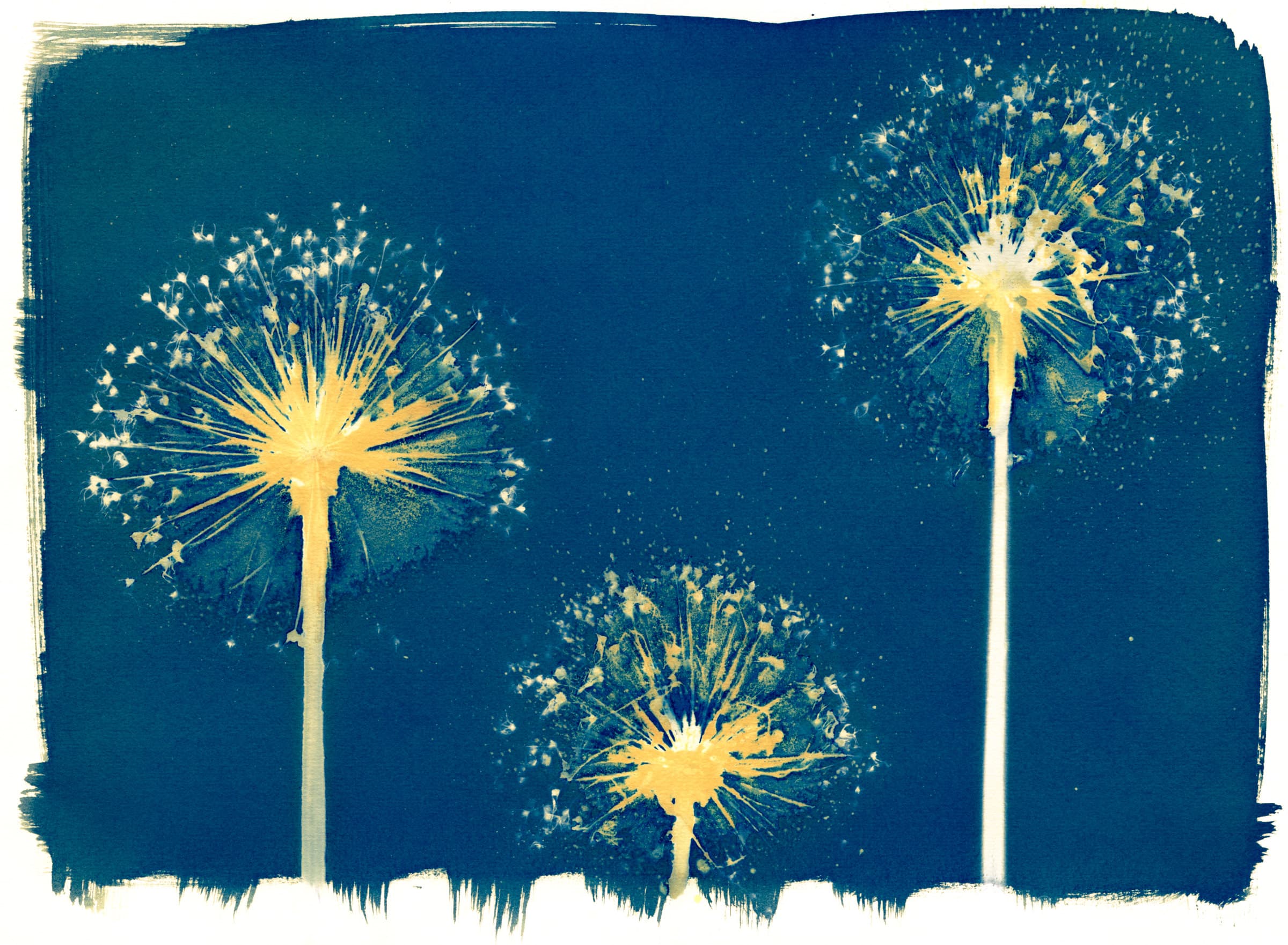
This image was a turning point for me, for two reasons.
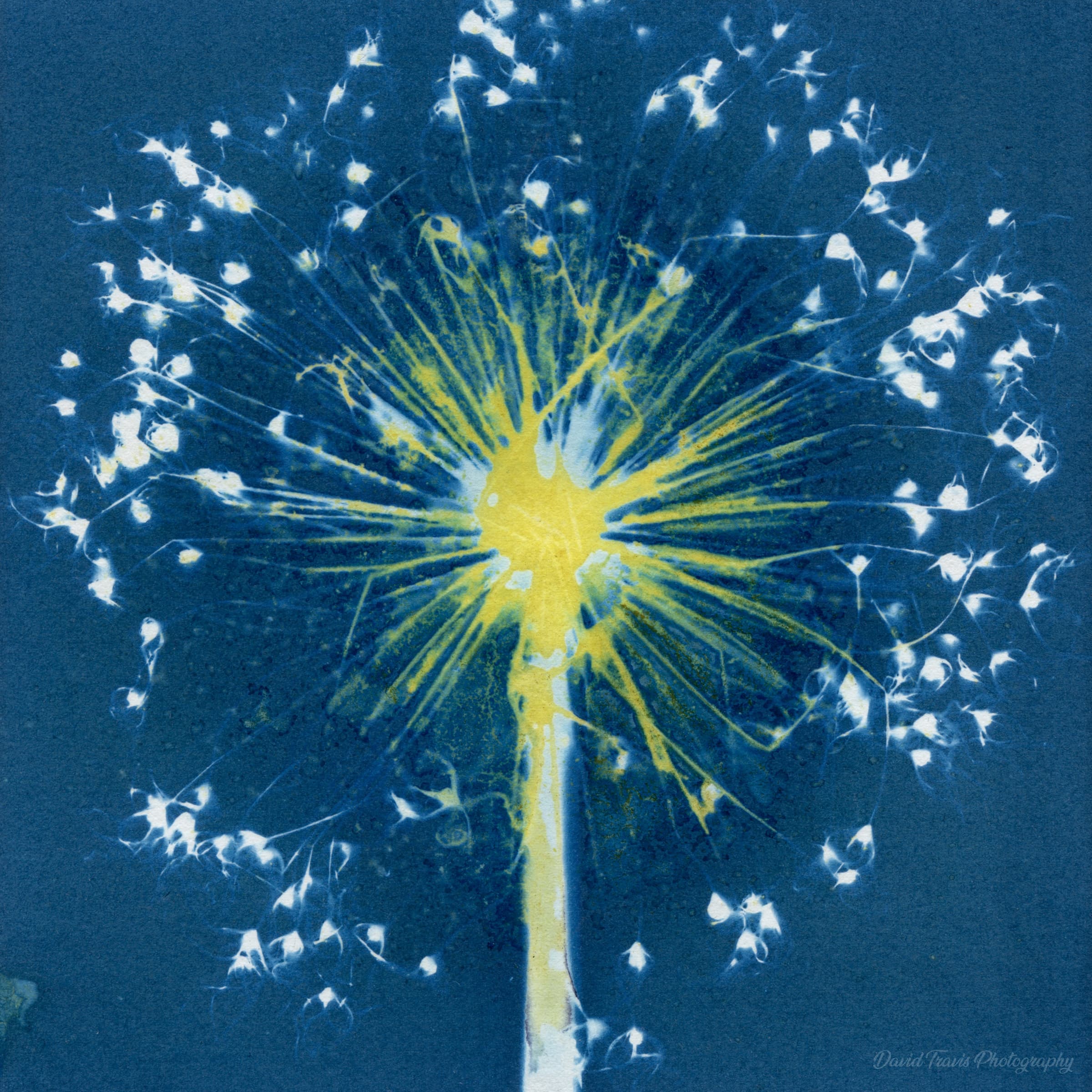
First, I realised the importance of finding the right botanical subject. These prints show allium seed heads and I think they provide exactly the right subject for this treatment. The seed heads are simple enough for people to identify, transparent enough that the contact printing process can reveal more than a silhouette, and detailed enough to be visually interesting.
Allium Fireworks
The second reason was that I realised the images could also take on a conceptual reading.
This wasn't my intention when I started the work. I'd intended it as a bit of fun, something to do in the sunshine.
But a few days ago, the UK Government literally raised the alarm about wildfires. It was becoming hard not to see fire everywhere, including inside these cyanotypes. The prints were capturing something about how the planet feels to me in the Summer of 2026.
UK Government wildfire alert
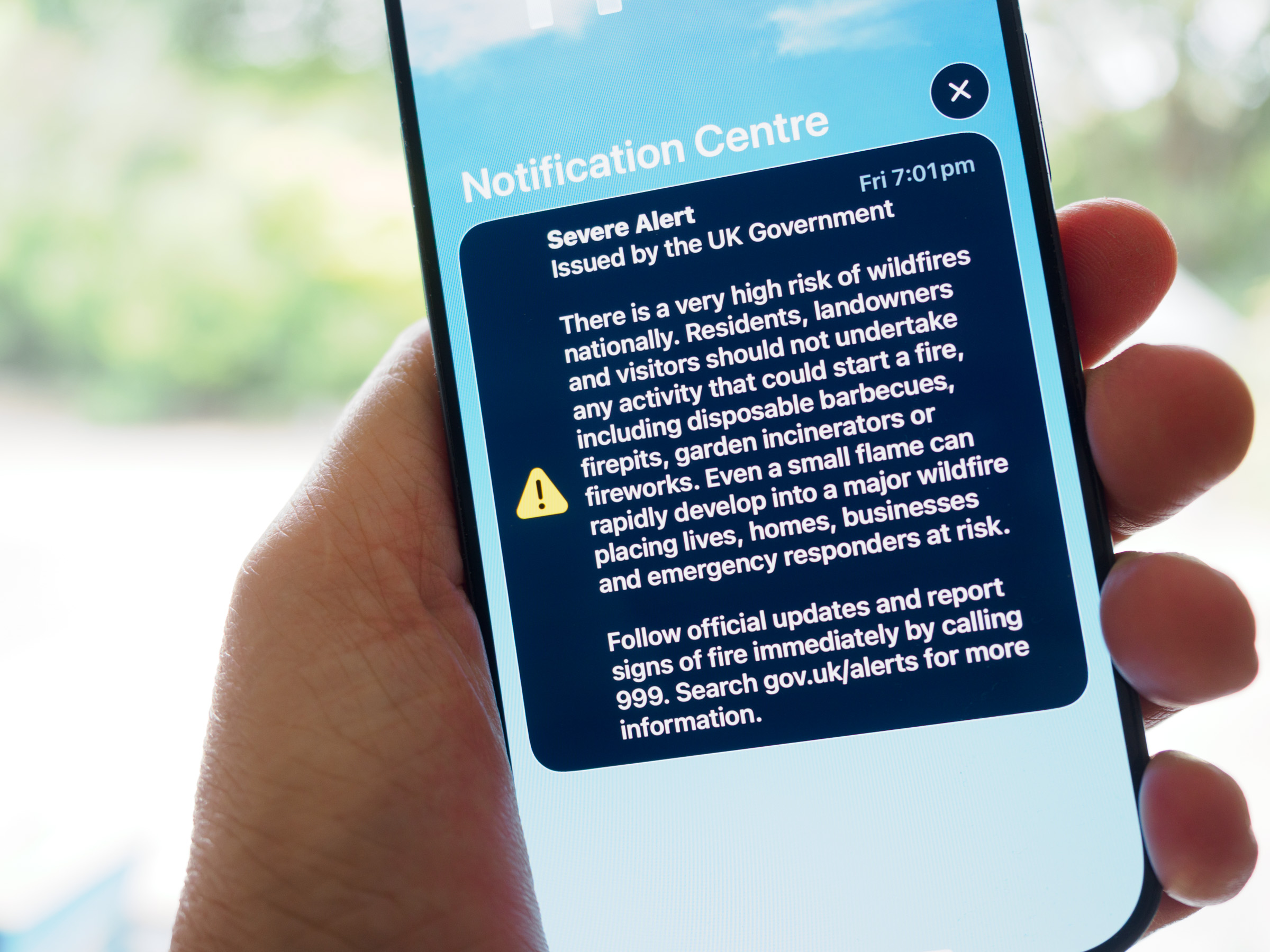
Here I am, making cyanotypes while the world burns — quite literally, as there are wildfires just a few miles from where I live. It's not a concept that occurred to me when I started the work, but now I couldn't help but view these seed heads metaphorically: as miniature worlds burning at the core.
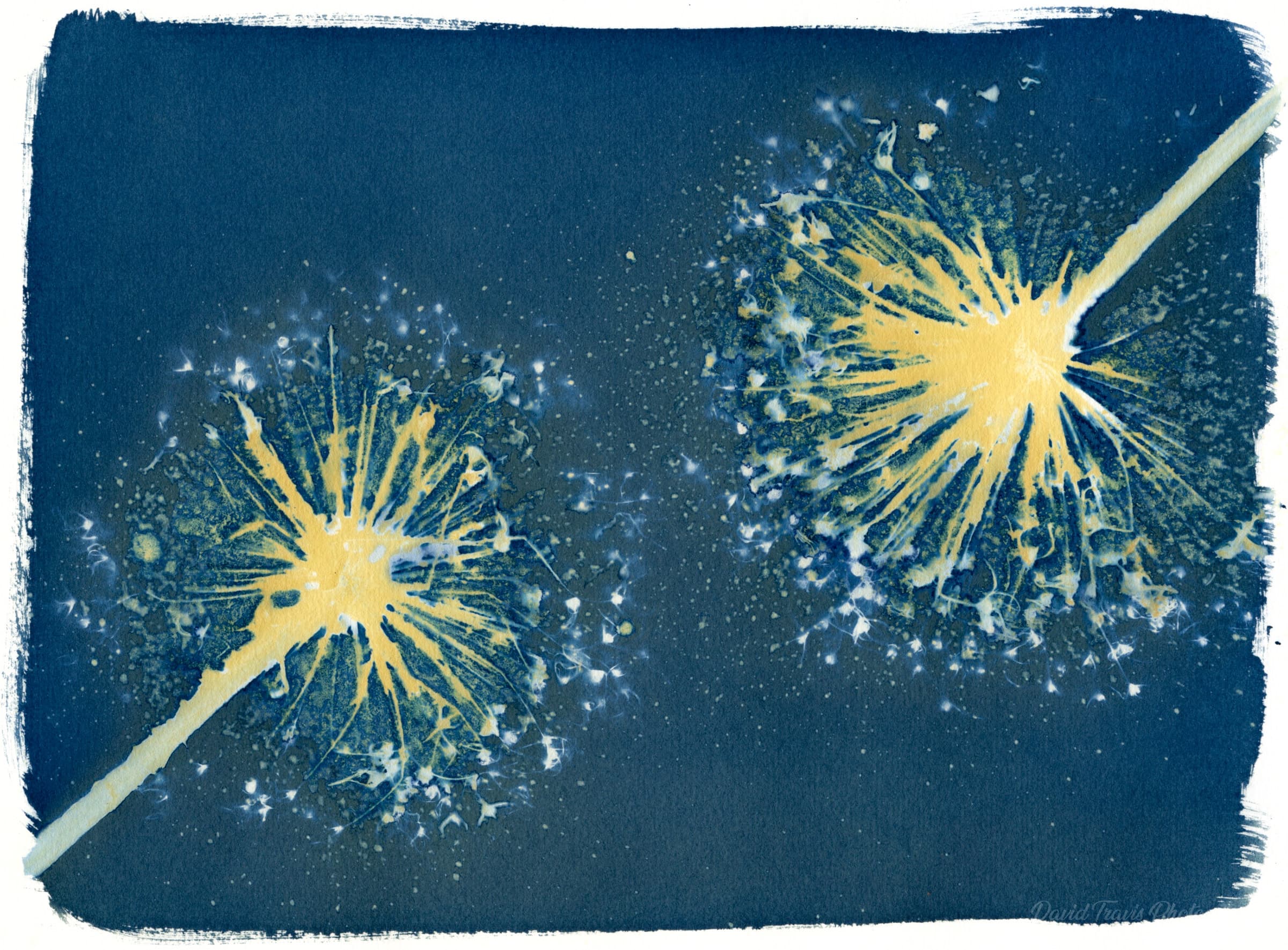
This reading is even more stark when the print contains a single ‘world’. It simplifies the composition, resembling a firework.
Drill baby, drill
If you turn this print upside down it looks like people drilling into the core of the 'planet', which tells another story.
What I learned with my experiments in wet cyanotype
I’m still unsure how I feel about the wet cyanotype process. My preference is for a controlled technique with precise outcomes. That's why I ended up with just one ‘wet’ ingredient.
That said, I also ended up with images that I find simple and beautiful.
And the project taught me that play can lead to images that go beyond formalism: yes, these are pretty cyanotypes of seed heads. But a collection of these images is a metaphor for something else.
This was a project that kept me creatively active in the hot weather. I’m sure that I’ll think more about this project over the cooler months and will no doubt return to it next Summer, when the world burns again.